WELCOME TO PESTS & WEEDS CENTRAL
Simply click on your region on the map below to find your Pests and Weeds


Welcome To "Pests and Weeds Central"
New Zealand's Information Centre For All Things Pests or Weeds.
A huge database created, maintained, shared and updated by New Zealand's Regional Councils and the Department of Conservation
An educational resource for schools, conservation groups and businesses, and a reference guide for land owners, boat users and the general public. Learn to identify, control and report unwanted organisms so we can protect our ecosystem for the next generation.

Information for Councils
A Pest and Weeds Hub for your Council


Featured Pest
Madagascar Ragwort
Madagascar ragwort is an invasive and highly toxic pasture weed. Previously thought to be confined to Northland, this weed has recently been discovered in south Wairarapa.
This yellow-flowered daisy weed is a serious threat to pastoral farming in New Zealand. Consumption of Madagascar ragwort can be fatal to stock, in particular horses and cattle. This plant remains toxic even as hay or silage. Most significantly, stock tend to avoid grazing near this plant, and pasture becomes less productive, negatively affecting animal body weight and milk production.
Madagascar ragwort produces prolific numbers of seeds: a single adult plant can produce 10,000 seeds within 6 weeks of germination, and can produce 30,000 seeds annually. Plants can also re-establish from small fragments of roots left in the ground. Madagascar ragwort looks similar to gravel groundsel, although gravel groundsel tends to be found on roadsides and gravelly/sandy areas, whereas if the plant is growing in pasture it is more likely to be Madagascar ragwort.
For further advice on identification and management of this weed, and rules specific to your region, consult with your regional council.
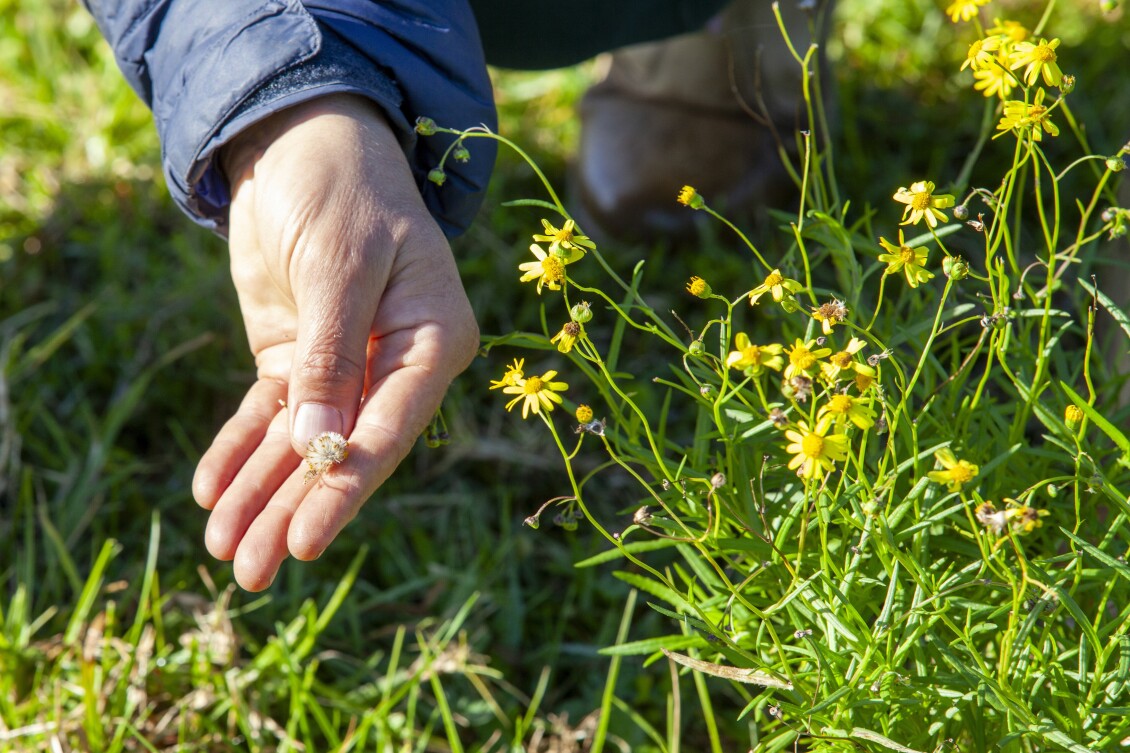
Photo: Wendy Bown
Further reading about Madagascar ragwort:
"Toxic weed found in Wairarapa threatens cattle and horses" (article by GWRC)
Northland Regional Council information booklet resource (PDF, 4MB)
Pāmu NZ - Case study: Battling Madagascar ragwort in Northland
GWRC Pest and Weed Central
Our Partners
Our Partners in cleaning up New Zealand


Additional Information
Useful Initiatives To Help Keep New Zealand Beautiful


If your Council would like to join Pest & Weed Central, or you have ideas on how we can improve our service, we would love to hear from you.
LATEST NEWS


